What Are ChatGPT, Claude, Llama, and All These AI Tools?

If you've spent any time online recently, you've probably heard names like ChatGPT, Claude, Llama, Gemini, Copilot, Codex, and about a dozen others. To someone who doesn't follow technology closely, it can feel like a new AI is being released every week.
The truth is that most of these tools are trying to solve the same problem: helping humans accomplish tasks faster and more effectively.
Think of artificial intelligence like the early days of automobiles. There were dozens of manufacturers building cars. Some focused on speed. Some focused on reliability. Some focused on affordability. Today's AI companies are doing something very similar.
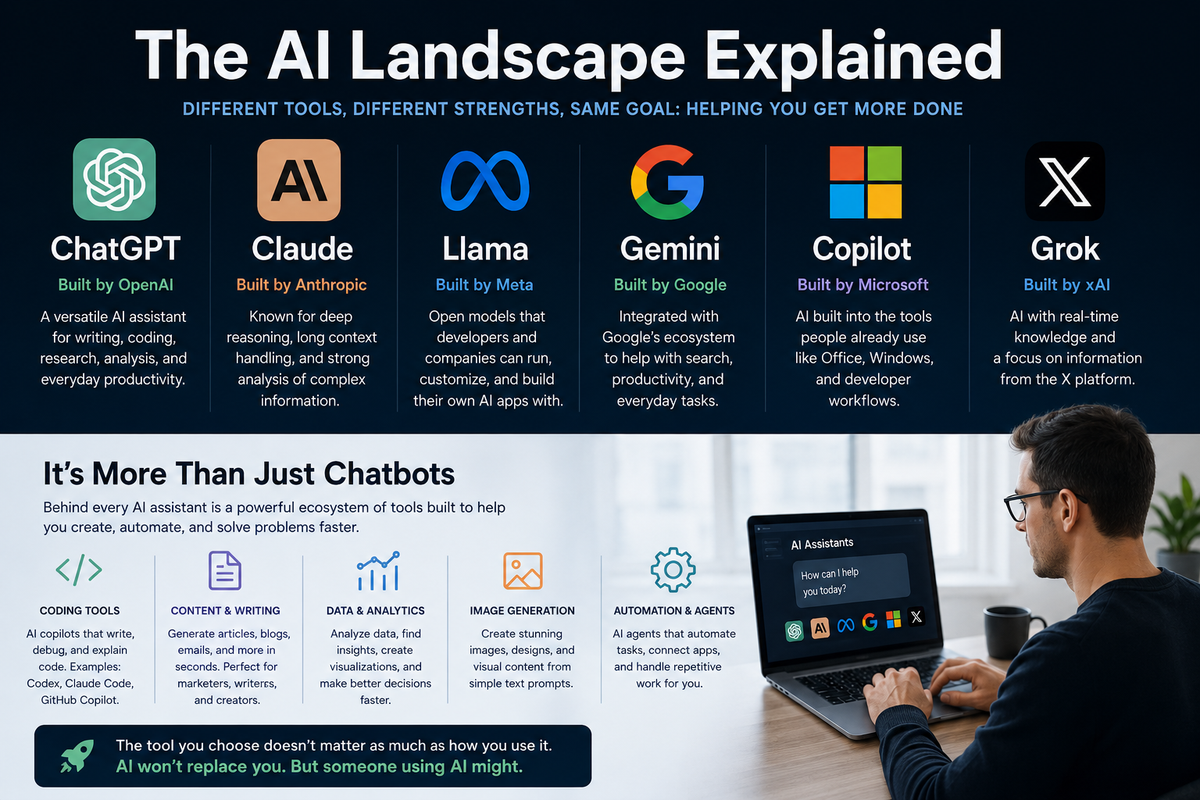
ChatGPT is probably the most recognizable name in AI. It has become the default tool many people think of when they hear the term "artificial intelligence." It can answer questions, write content, help with research, generate code, analyze data, and assist with countless everyday tasks. For many people, ChatGPT was their first real experience interacting with an AI system that felt conversational.
Claude is another major AI assistant. While it performs many of the same functions as ChatGPT, it has developed a reputation for handling large amounts of information particularly well. Many writers, researchers, and professionals use Claude when they need help analyzing lengthy documents or organizing complex ideas.
Llama is a little different. While ChatGPT and Claude are products people interact with directly, Llama is often used behind the scenes by developers and companies building their own AI-powered applications. If ChatGPT is a finished vehicle you can buy from a dealership, Llama is more like an engine that can be installed into different vehicles.
Then there are tools like Gemini and Copilot. These systems are designed to integrate deeply into existing ecosystems. Instead of existing as standalone assistants, they are built into products people already use every day. Whether it's email, spreadsheets, presentations, or operating systems, these AI assistants are becoming part of the software rather than separate from it.
The confusion often comes from people treating all of these names as if they are competing chatbots. In reality, most technology companies are building entire AI ecosystems.
Take software development as an example.
ChatGPT has tools that help developers write, test, and debug software. Claude has tools focused on helping programmers understand and modify large codebases. Microsoft integrates AI directly into development environments. Other companies provide models that developers can host themselves and customize for specific business needs.
The chatbot is only the part people see.
Behind the scenes are models, APIs, coding assistants, image generators, research tools, automation platforms, and specialized agents designed for specific jobs.
The bigger question is not which AI is best.
The better question is how these tools fit into your work.
A programmer might use AI to write boilerplate code. A data analyst might use it to identify trends in a dataset. A business owner might use it to draft marketing content. A student might use it to understand difficult concepts. In each case, the AI is performing a different role.
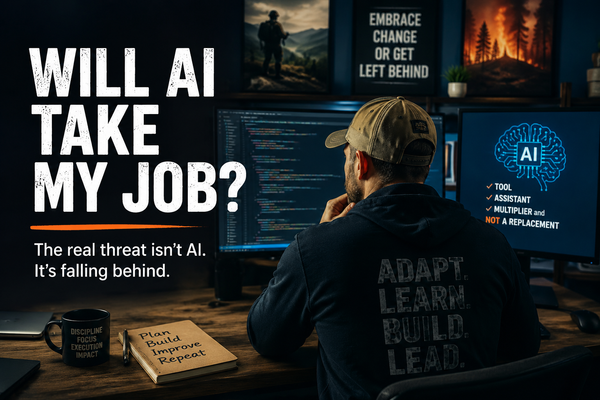
That's why I don't view AI as a replacement for skilled workers. I view it as a force multiplier.
The people who learn how to use these tools effectively will often outperform people who ignore them. Not because the AI is smarter than everyone else, but because it allows skilled individuals to move faster, solve problems more efficiently, and spend less time on repetitive work.
We're still in the early stages of this technology. New models will continue to appear, new companies will enter the market, and today's leaders may not remain on top forever.
What is unlikely to change is the value of learning how to use AI. Whether it's ChatGPT, Claude, Llama, or whatever comes next, the real advantage belongs to the person sitting behind the keyboard.